By Arushi Kapoor, Founder, The Agency Art House
A strong hotel art program starts with the guest journey, the building, and the operating brief, then selects work that belongs to those conditions. Site-specific pieces can connect lobbies, corridors, stairwells, and shared areas as one experience when design, procurement, installation, and maintenance are coordinated.
Hospitality design commentary for 2026 points toward multisensory environments, hyper-local materials, and wellness integrated into the building, with art moving from hung pieces toward sculptural and built-in work. That direction creates opportunity, but it also makes early coordination and practical review more important.
Key takeaways
Write one art brief that connects guest experience, architecture, operations, and budget.
Coordinate built-in art with designers, engineers, contractors, and hotel operators early.
Evaluate sensory impact, access, durability, cleaning, and replacement before approval.
Document ownership, installation, care, and future maintenance at handoff.
What should a hotel art brief include?
Define the property’s goals and the parts of the guest journey the art program should address. Describe the arrival, lobby, circulation routes, guest-facing amenities, and any other areas included in the commission. State the desired tone and relevant local context without reducing the brief to a color palette or a list of decorative objects. Identify the project’s budget owner, design lead, operator, procurement contact, and final approvers.
Set practical boundaries: project milestones, construction coordination, room access, accessibility, safety review, lighting, sound, cleaning, maintenance, and replacement expectations. Say whether the program may include commissioned, acquired, integrated, or temporary work, and who will contract with artists and vendors. The brief should distinguish concept development from a purchase commitment. When the scope and authority are clear, an art advisor or consultant can compare proposals against the same operational and design requirements.
Where can built-in and site-specific work add value?
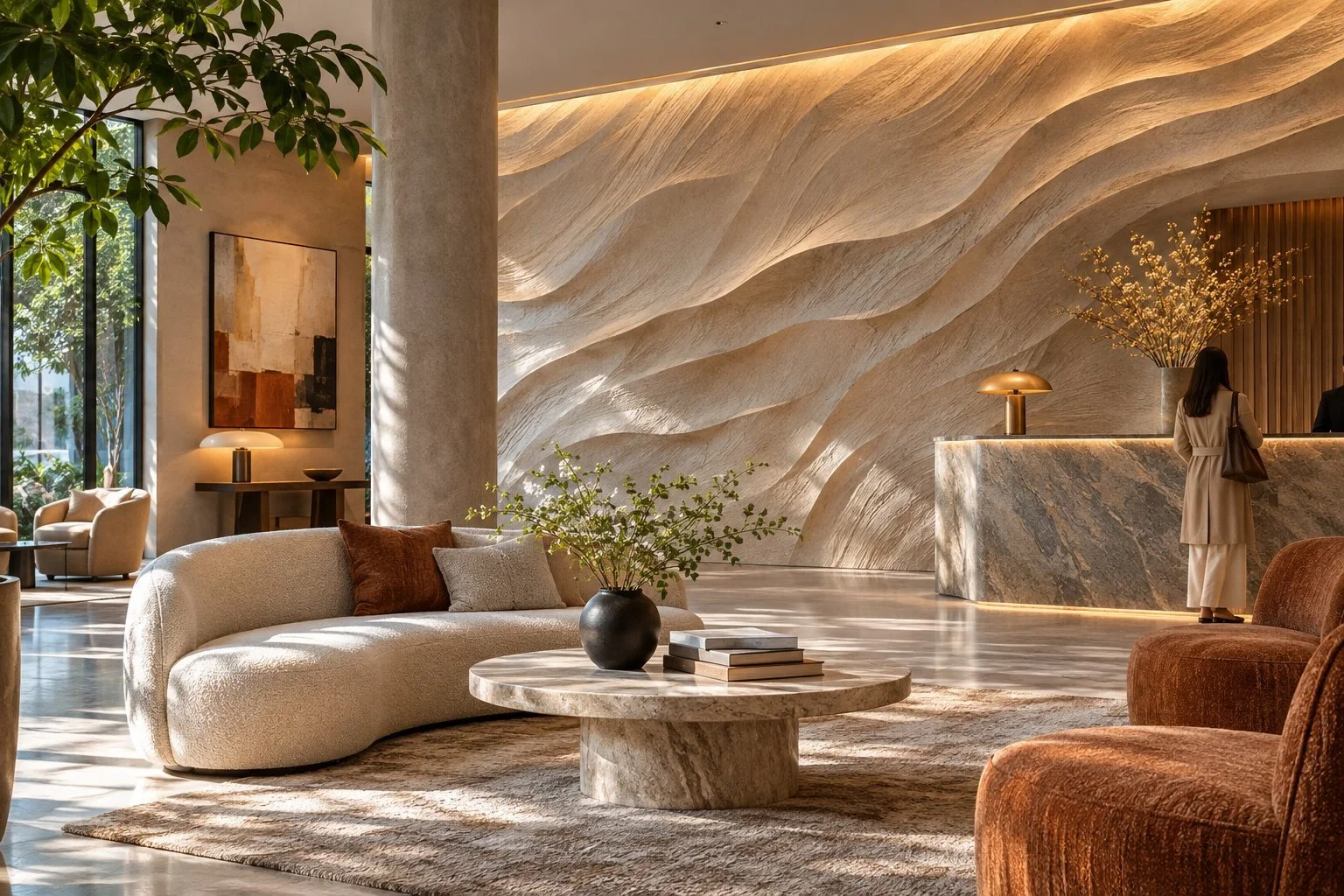
Site-specific work can shape how a visitor moves through a space. A sculptural wall, textured surface, or installation may establish a threshold, make a corridor feel purposeful, or give a stairwell a distinct identity. The Hospitalitynet summary of Wimberly Interiors’ 2026 trends describes a shift toward built-in and site-specific art that turns corridors, lobbies, and stairwells into narrative passages. Treat that as a design direction to evaluate, not as a prescription for every property.
Ask what the work needs from the architecture and what it gives back to the guest experience. Could it remain legible at different distances and in changing light? Does it create a quiet pause or compete with wayfinding and circulation? Does its scale work with the space when occupied? Invite the artist and design team to study the actual site, guest routes, and operational patterns before finalizing the concept. A compelling installation should serve the place without making movement or service harder.
Make circulation a design criterion from the first concept review. Check sightlines at entry points, turning areas, elevators, and transitions between public and quieter zones. Ask how the work reads when a visitor is moving, waiting, or seated, and whether it could interfere with signs or service functions. A site-specific commission should be tested at the scale and position where guests will encounter it. Renderings can support discussion, but the team should also review dimensions, materials, and an installation mock-up when those choices affect the experience.
How should multisensory design inform art choices?
The hospitality trend brief emphasizes acoustics, scent, and light alongside visual design. In an art program, that means asking how a work interacts with sound, lighting, materials, and the atmosphere of the space. A reflective surface may respond strongly to lighting; a textured installation may change how a room feels and sounds. These effects are project questions to assess with the relevant specialists, not benefits to promise without testing.
Map which sensory decisions belong to the artist and which belong to lighting, acoustics, landscape, or operations. Coordinate mock-ups or samples where the decision affects a large area or is difficult to reverse. Ask the hotel operator whether the work’s sensory effect fits the intended use at different times and levels of activity. A calm reading lounge, active lobby, and circulation corridor need not use the same visual intensity. Balance means giving the art a role while preserving comfort, access, and clear navigation.
What does procurement need to cover?
Create a procurement schedule that aligns artist selection with design development, technical review, fabrication, construction access, installation, and opening. Specify who issues the request, who evaluates responses, how fees and expenses are approved, and which party contracts with the artist. If work is integrated into construction, identify the interfaces with millwork, lighting, electrical systems, structure, finishes, and building controls. Determine what information the contractor needs and when it must arrive.
The contract should state the approved concept, scope, milestones, payment schedule, revision process, intellectual-property terms, insurance responsibilities, delivery and installation conditions, and documentation expected at completion. Include a process for delay, substitution, damage, or a change in site conditions. Confirm who owns samples, prototypes, and final work. Procurement is not simply selecting an attractive proposal; it is creating a reliable path from a concept to an installed work that the hotel can operate and care for.
How do you test feasibility before approval?
Review material, weight, attachment, power requirements if any, light exposure, surface interaction, cleaning access, and replacement options with qualified professionals. Have the project team identify what requires engineering, fire and life-safety, accessibility, or code review. The project’s own specialists and authorities should confirm requirements; an art advisor should not be asked to certify technical compliance outside their role. Make a record of assumptions and approvals before fabrication begins.
Ask for a maintenance plan that answers who inspects the work, what routine care it needs, how damage will be reported, and which specialist can assess a problem. For a built-in piece, include access panels, removable components, finish samples, and replacement specifications in the design conversation where relevant. Ask the artist to identify materials and care constraints in writing. Feasibility review protects the concept by finding problems while the team can still adjust the design, schedule, or installation method.
A hotel’s procurement team should also map who will be affected by the proposed installation. Include the operator, housekeeping, engineering, security, guest-services, and facilities staff where their work intersects with the art. Ask them to flag cleaning methods, access routes, touch points, equipment needs, or service conflicts early. This review does not give every department veto over artistic decisions; it makes operational consequences visible so the owner can resolve them before the work is fabricated.
If the project includes several sites or phases, define what should remain consistent and what can respond to each property. A shared framework can establish documentation, quality review, and artist contracting practices, while each site brief addresses its own architecture and guest experience. Avoid treating a repeatable specification as a substitute for site study. Keep change decisions in writing so the team understands which elements are fixed and which remain open to adaptation.
How should the handoff work?
At completion, assemble a record set for the owner and operator. Include the final approved design, artist and work identification, material specifications, installation drawings, photographs, warranties where applicable, care instructions, and contacts for future conservation or repair questions. Confirm who receives the files and where they will be stored. Update asset records so staff can identify the work during maintenance, renovation, or a change of operator.
Schedule a closeout conversation with the artist, consultant, design team, contractor, and hotel operations. Walk the installed work, resolve outstanding items, confirm any access or cleaning restrictions, and explain the escalation path if a problem arises. The collection should connect to the property’s broader art records. The existing hotel art procurement guide can sit alongside the project file as a starting point for ongoing program decisions. A good handoff makes responsibility visible after opening day.
Common questions
What is site-specific art in a hotel?
It is work developed or selected in relation to a particular site and its architecture, use, or experience. Define the intended relationship in the brief and test it with the design and operations teams.
When should hotel art procurement begin?
Begin during early project planning so the art program can coordinate with design, construction, procurement, and operations. The scope should identify approval and technical review milestones.
Who maintains built-in hotel art?
The owner and operator should assign responsibility before installation. Include care guidance, records, access needs, and specialist contacts in the handoff.
Sources
Hospitalitynet: Wimberly Interiors: 2026 Hospitality Design Trends
Association of Professional Art Advisors: Association of Professional Art Advisors
American Institute for Conservation: Caring for Your Treasures
Northeast Document Conservation Center: Preservation Leaflets
Related reading
Art for Hotels and Hospitality Projects: Procurement, Budgets, Care
What an Art Acquisition Concierge Does (and When You Need One)
About the author
Arushi Kapoor is the founder of The Agency Art House, an art advisory that helps collectors, family offices, developers and hospitality groups source, acquire and manage fine art across the primary and secondary markets. She was named to the Forbes 30 Under 30 list in Art & Style and works between Los Angeles and Miami.